 OSURIS
inlandWaters
GEMET keywords
Type of resources
Available actions
Topics
INSPIRE themes
Keywords
Contact for the resource
Provided by
Years
Formats
Representation types
Update frequencies
status
Scale
Resolution
-
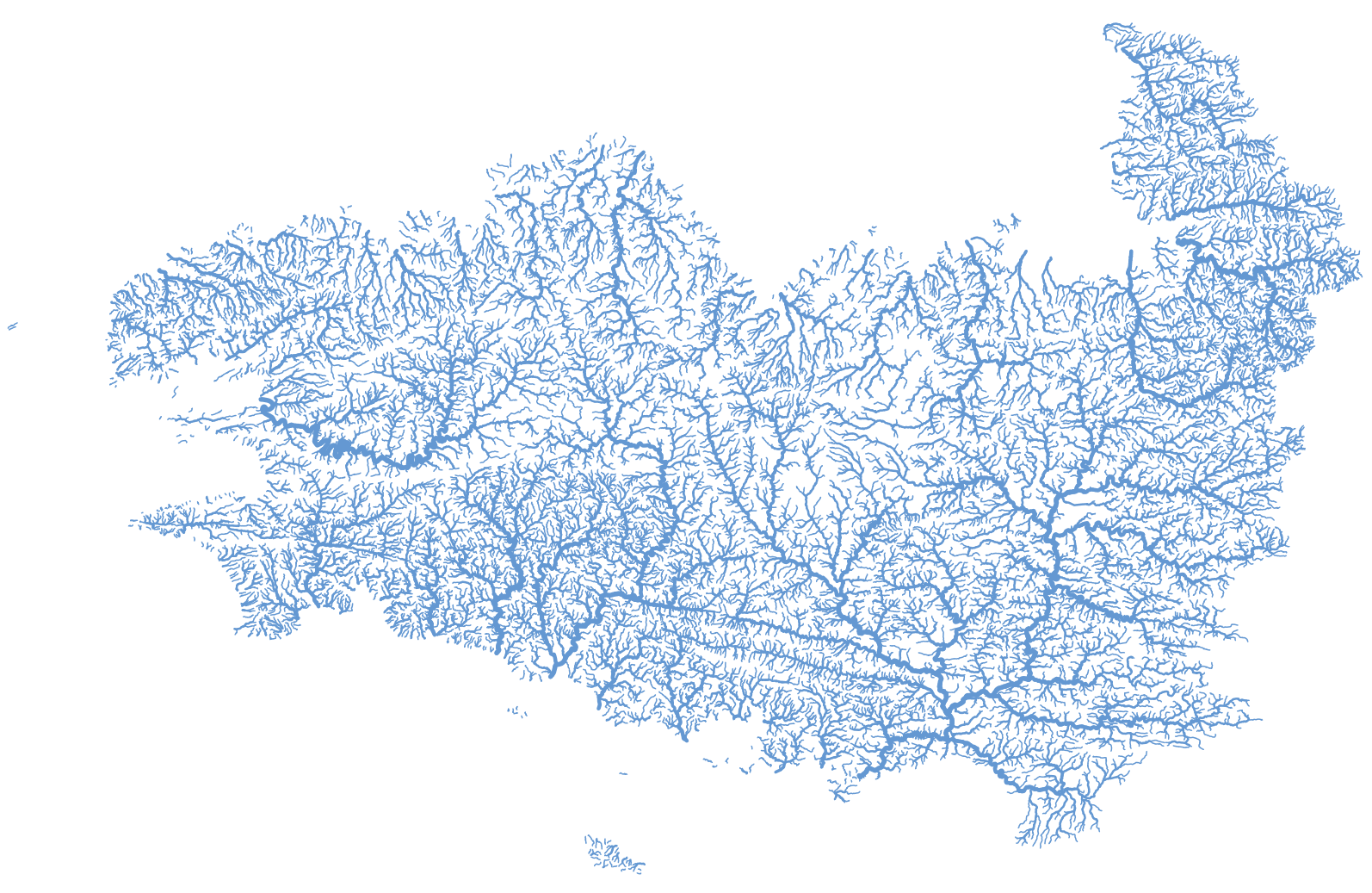
Représentation des tronçons hydrographiques de la Bretagne et des bassins versants de la baie du Mont Saint-Michel extraite de la BD Topage® version 2020. cette couche géographique est corrigée de telle sorte que soit garantie la continuité et l'unicité du chemin de l'eau de l'amont vers l'aval (suppression des boucles, des canaux, ...).
-
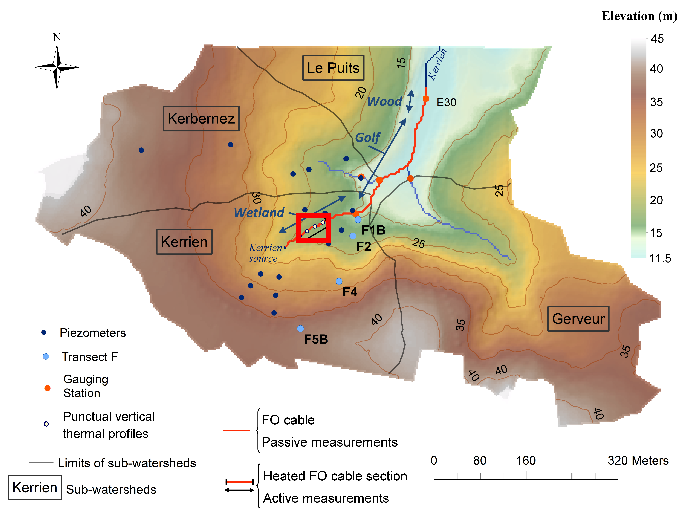
Data corresponding to the active-DTS experiment conducted in Kerrien by deploying and burying an heatable FO cable in the streambed sediments (in the wetland area). Further details are available in the file: http://agrhys.fr/BVE/nataline/mesuresactives/infos.pdf and results are presented in Simon et al. (2021)
-
Étude sur les zones humides de la "Baie du Mont Saint Michel". Cartographie de l'occupation du sol. Site Étudié : Marais du Couesnon. Objectif : -Diagnostics phyto-écologique et paysager des marais de la basse vallée du Couesnon et de leur rôle fonctionnel potentiel en terme d'accueil de l'avifaune. -Proposer des orientations de gestion. -Optimiser les conditions d'accueil pour l'avifaune, par une gestion intégrée des activités humaines sur les sites concernés. -Identifier les enjeux de conservation.
-
Étude sur les zones humides de la "Baie du Mont Saint Michel". Cartographie linéaire des résaux bocagers. Site Étudié : Marais de la Folie. Objectif : -Diagnostics phyto-écologique et paysager des marais de la basse vallée du Couesnon et de leur rôle fonctionnel potentiel en terme d'accueil de l'avifaune. -Proposer des orientations de gestion. -Optimiser les conditions d'accueil pour l'avifaune, par une gestion intégrée des activités humaines sur les sites concernés. -Identifier les enjeux de conservation.
-
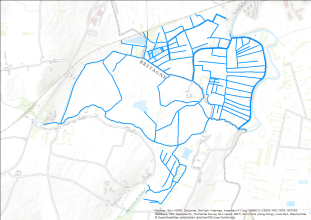
Étude sur les zones humides de la "Baie du Mont Saint Michel". Site Étudié : Marais du Mesnil. Objectif : -Diagnostics phyto-écologique et paysager des marais de la basse vallée du Couesnon et de leur rôle fonctionnel potentiel en terme d'accueil de l'avifaune. -Proposer des orientations de gestion. -Optimiser les conditions d'accueil pour l'avifaune, par une gestion intégrée des activités humaines sur les sites concernés. -Identifier les enjeux de conservation.
-
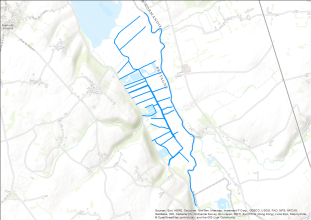
Étude sur les zones humides de la "Baie du Mont Saint Michel". Cartographie linéaire des résaux hydrographiques. Site Étudié : Marais de Sougéal Privé. Objectif : -Diagnostics phyto-écologique et paysager des marais de la basse vallée du Couesnon et de leur rôle fonctionnel potentiel en terme d'accueil de l'avifaune. -Proposer des orientations de gestion. -Optimiser les conditions d'accueil pour l'avifaune, par une gestion intégrée des activités humaines sur les sites concernés. -Identifier les enjeux de conservation.
-
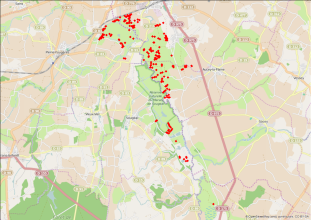
Étude sur les zones humides de la "Baie du Mont Saint Michel". Site Étudié : Marais du Couesnon. Objectif : -Diagnostics phyto-écologique et paysager des marais de la basse vallée du Couesnon et de leur rôle fonctionnel potentiel en terme d'accueil de l'avifaune. -Proposer des orientations de gestion. -Optimiser les conditions d'accueil pour l'avifaune, par une gestion intégrée des activités humaines sur les sites concernés. -Identifier les enjeux de conservation.
-
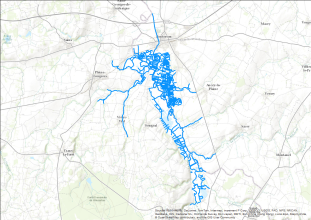
Étude sur les zones humides de la "Baie du Mont Saint Michel". Cartographie linéaire des résaux hydrographiques. Site Étudié : Marais du Couesnon. Objectif : -Diagnostics phyto-écologique et paysager des marais de la basse vallée du Couesnon et de leur rôle fonctionnel potentiel en terme d'accueil de l'avifaune. -Proposer des orientations de gestion. -Optimiser les conditions d'accueil pour l'avifaune, par une gestion intégrée des activités humaines sur les sites concernés. -Identifier les enjeux de conservation.
-
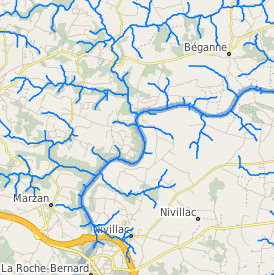
Réseau hydrographique modélisé sur l'ensemble des bassins versants de Bretagne dont la surface est supérieure à 250 hectares. Le traitement a été réalisé à partir du Modèle Numérique de Terrain à résolution de 50 m. par le logiciel MNTSurf par seuillage de la surface contributive à 25 hectares. Cette couche a été améliorée en terme de résolution et d'emprise géographique par le Réseau hydrographique modélisé de la Bretagne et de la baie du Mont Saint-Michel (https://geosas.fr/geonetwork/srv/eng/catalog.search#/metadata/5bb0d27d-827f-4ad8-8add-c3d3589e5b5d)
-
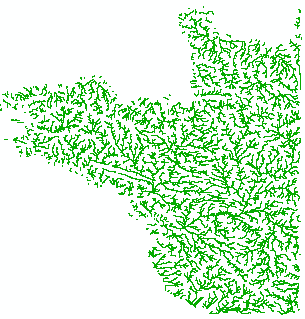
Reseau hydrographique deduit du MNT 100m IGN par ArcGis sur la totalite du Massif armoricain